Summer might still be in full swing, but for Christmas Challenge fundraisers, now is the time to start thinking ahead.
Behind every successful Christmas Challenge campaign is a strong fundraising plan, and securing your pledges is one of the most important steps you can take before the busy fundraising season begins.
The deadline to confirm your pledges is Friday, 28 August 2026, so whether you’re already having conversations with supporters or haven’t quite started yet, this is the perfect time to focus your efforts.
Securing pledges can feel daunting at first, but with the right approach, it’s a brilliant opportunity to engage your biggest supporters, strengthen relationships and give people a meaningful role in your campaign.
Here are our top tips to help you secure pledges with confidence.
First, a quick refresher: what is a Pledger?
To take part in the Christmas Challenge, charities need to raise a portion of their match funding pot through pledges.
A pledger is a supporter who commits to making a donation after the campaign finishes. Their pledged funds are then used to double donations made by the public during the Christmas Challenge campaign week (1 – 8 December 2026).
If you raise at least £1,000 in pledges, you may be eligible to receive additional match funding from one of Big Give’s Champion partners. Champions can provide up to the same amount as your pledged funding, helping your charity unlock even more support. Check out our Christmas Challenge explainer video and pledge model infographic for further support on understanding the match funding model.
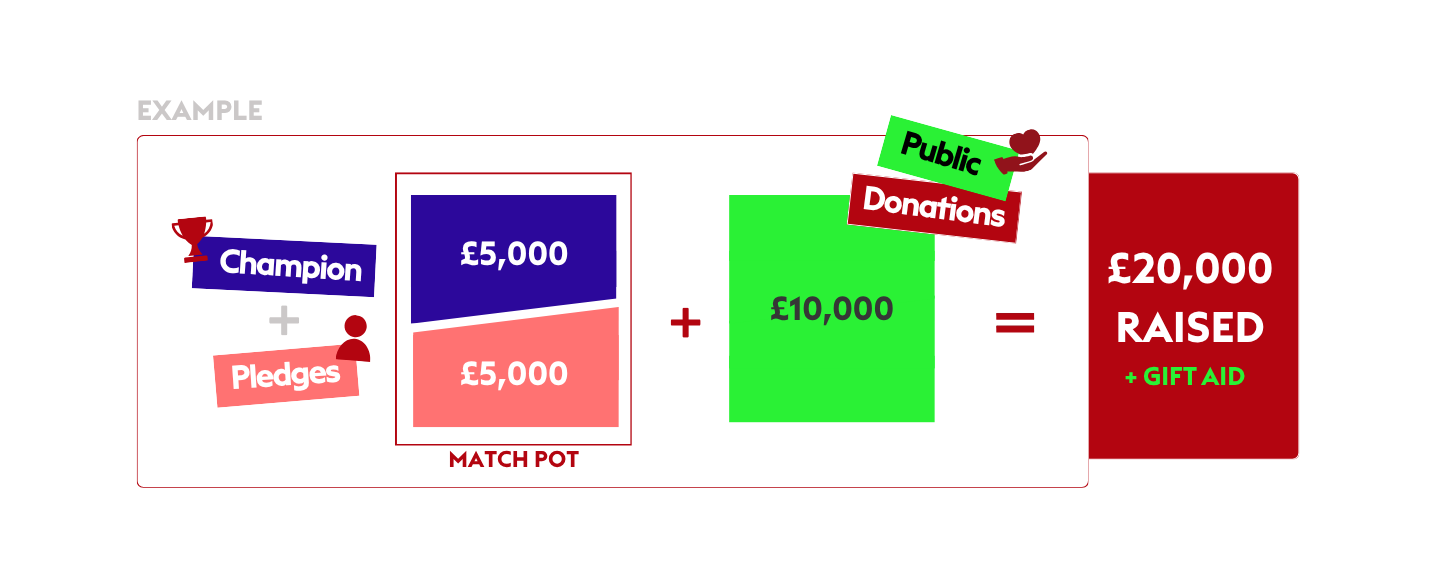
Your pledgers can come from all corners of your network. Think about the people who already understand and believe in your work – this could include trustees, long-term donors, trusts and foundations, corporate partners, community supporters or dedicated volunteers.
The key is not simply finding people who can give, but finding people who are excited to help make your Christmas Challenge campaign a success.
Tip 1: Start close to home
Your warmest supporters are often your best starting point.
The people closest to your charity already understand your mission and the difference your work makes. Asking them to become a pledger isn’t just asking for another donation; it’s inviting them to play a role in helping your wider community of supporters make an even bigger impact.
Start by looking through your existing relationships.
- Who has supported your charity for years?
- Who regularly champions your work?
- Who has previously given a significant gift or shown interest in your impact?
- Trustees can also be a valuable source of support here. They often have strong networks and may be able to introduce you to potential pledgers who are passionate about your cause.
A simple, personal approach can go a long way:
Example approach: “Hi [NAME], as someone who has supported our work for years, we’d love to invite you to be part of our Christmas Challenge campaign by becoming a pledger. Your support will help us unlock match funding and inspire more people to donate during campaign week.”
Tip 2: Make pledging simple and clear
For many supporters, pledging may be a new concept, so don’t assume they already understand how it works.
The most important thing is to explain the opportunity in a simple way:
- Your pledge will help double donations made by the public during the Christmas Challenge campaign week.
- You won’t need to pay anything until after the campaign has finished – there’s no money upfront
- Your support could help unlock additional match funding from a Big Give Champion.
The focus should be on the impact of their role. They aren’t just making a donation, they’re helping create the momentum that encourages others to give.
Try to avoid leading with too much detail or technical information. Supporters don’t need to understand every part of the match funding model straight away; they just need to understand why their involvement matters. If they ask for more, that’s when you can follow up with the details. Check out our easy-to-share pledger journey resource.
Example approach: “By becoming a pledger, your gift will help us double donations from our supporters during the Christmas Challenge. Together, we’re aiming to raise £[0000] to support [your cause], and your commitment will help inspire others to join us.”
Tip 3: Make it personal (and start conversations early)
A pledge ask is much more powerful when it feels personal.
Mass emails can be useful for campaign updates, but securing pledges is usually about building relationships. A phone call, personalised email or face-to-face conversation can make supporters feel valued and recognised.
August is also a great time to start these conversations. Many supporters will be more available before the busy autumn fundraising period begins, and securing pledges early gives you more time to focus on your campaign plans.
Don’t be afraid to make the ask. Supporters who care about your work often appreciate being given the opportunity to play a bigger role.
Example approach: “Hi [Name], I know how much you care about our work supporting [cause], and I wanted to ask whether you’d consider becoming a pledger for our Christmas Challenge campaign this year. I’d love to tell you more about how it works and why your support would make such a difference.”
Tip 4: Help supporters see the bigger picture
Match funding is a powerful motivator because it allows supporters to see their generosity go further.
When speaking to potential pledgers, position them as the people who help make the magic happen. Their pledge creates the opportunity for your wider supporter community to get involved and can turn one gift into many. Check out our pledge reach-out template.
Some pledgers may also appreciate being recognised for their support. Others may prefer to remain anonymous. Always ask what they’re comfortable with and tailor your approach. Either way, offer a few light-touch options:
- Name check in the ‘summary’ section of your campaign page
- A thank you on your social media channels
- Personal updates after the campaign
- A special thank you email or impact call
Think of it as the cherry on the Christmas pudding. Pledging is a meaningful act, and thoughtful appreciation helps build long-term trust and loyalty.
Example approach: “If you’d be happy to be recognised, we’d love to feature your name on our campaign page as one of our core match funders. We’ll also make sure you get a personal update on the impact of your gift after the campaign.”
Tip 5: Think beyond your usual supporters
Your existing network is a great place to start, but don’t be afraid to think creatively.
Could a local business become a pledger? Is there a previous supporter who has not donated recently but remains engaged with your work? Are there trustees, ambassadors or volunteers who could help open new conversations?
Pledge fundraising doesn’t need to sit with one person. Encourage your wider team, trustees and supporters to help identify potential pledgers and make introductions.
Remember: you’re not simply asking people to give money. You’re offering them the chance to help unlock generosity from others. Check out our updated marketing guidebook for more in-depth tips and tricks on networking, audiences and using marketing channels.
Tip 6: Use the resources available
You don’t have to do this alone. Big Give provides a range of resources to help you confidently approach potential pledgers and manage your match funding journey. Make sure you explore:
- Our pledge guidance and templates in your charity Trello board
- Our pledge webinar, featuring insights and practical advice from experienced Christmas Challenge participants
- Explore step-by-step guidance on the charity portal under the ‘support’ section
- Read our charity case studies for examples from charities who have successfully used pledges
These resources include helpful conversation starters, supporter communications and practical tips to make securing pledges easier. You should also feel confident answering common supporter questions, including:
When do I pay my pledge?
Pledges are fulfilled after the Christmas Challenge campaign has finished (from 12pm midday on 8 December 2026 – 15 January 2027).
Is my pledge eligible for Gift Aid?
Yes. Gift Aid can be processed by your charity in the usual way, as long as the relevant requirements are met.
What does my pledge do?
Your pledge helps double donations made by the public during the Christmas Challenge campaign week.
Example approach: “I know this is a bit different to a typical donation, so I’ve attached a short summary that explains how pledging works and what your support would mean for our campaign. If you have any questions, I can talk you through the process, or I can point you to Big Give’s quick explainer video.”
Tip 6: Make match funding the star of your ask (you’ve got this!)
Securing pledges might feel like another task on an already busy fundraising calendar, but it’s one of the most valuable parts of your Christmas Challenge preparation. It gives your biggest supporters a unique way to champion your cause, helps you unlock more match funding and builds stronger relationships that can last well beyond the campaign. (The power of match funding is a brilliant incentive).
Supporters love knowing that whatever they give, their donation will go even further. Just because they’re helping to provide the match funding doesn’t mean they’re missing out; it just means they get to see the magic from the other side. You can position them as the spark that ignites generosity across your whole supporter base.
Start those conversations early, be confident in the opportunity you’re offering, and remember: people often say yes when they understand the difference their support can make.
Need more help? We’re always here to support you: biggive.org/support